
Showing posts with label tuba. Show all posts
Showing posts with label tuba. Show all posts
31 January 2014
The Met Man, Vans, and Tuba
Got to play with Dr. Denson Paul Pollard (Bass/Tenor Trombonist of The Metropolitan Opera) last week. It was pretty bad ass. My new Vans look pretty good too. Love those shoes.

08 April 2013
Adventures in Louisiana

For those of you who don't know, SCRTEC stands for South Central Regional Tuba Euphonium Conference. It's kind of like the auto show for tuba players... Well actually the regional auto show for tuba players. Every two years ITEC (International Tuba Euphonium Conference) is hosted some where in the world. And in between those years, regional conferences are held all over the USA. It's rumored that next year's ITEC will be back in Bloomington, Indiana on the Indiana University campus.
So anyway, SCRTEC. It was a cool experience; my first tuba conference. There were some great performers who gave inspiring performances. Some of the usual big names were there: Demondrae Thurman, Ben Pierce, and Adam Frey among them. But what inspired me most were some of the people who are not always included in that constant adoration of tuba-euph performance. The first of which was Justin Benavidez. He played a program of Piazzola (Etude No. 3), Tibault (3 Danses), and Romanyhi (Parallels). My favorite was the Romanyhi. It was full of musicality and effortless phrasing. It left me breathless at one point; the second movement I think it was. It was just really good music playing.
Another mesmerizing performance was that of Kevin Wass. He's the Tuba-Euph Prof. at Texas Tech. He premiered a piece by Carson Cooman called Shadowbook (Three Songs in the Night) written for tuba, clarinet, and piano. It had me on the edge of my seat from the beginning to the end. The music itself is really interesting. But what made the performance excellent was the intensity of the players. They took on the character of the movements without crossing a line into the overly dramatic. Dr. Wass really showed off with his abilities to play with so many colors in rapid succession. It was a demanding piece and it didn't seem so hard for Wass.
By far my two favorite performances.
I wasn't a big fan of the lectures I attended. Between speakers that were too awkward in front of a group of people and straight up boring presentation, I did not leave most sessions with a lot on my mind besides how I could've gotten a beer instead. There was one discussion, however, that really caught my attention and kept it. Joe Skillen, LSU tuba/euph professor, gave a presentation on entrepreneurship in art music. It was enlightening and informative as well as affirming. He's direct but also easy-going; the kind of guy who loves sharing new ideas but also likes putting them into motion. Skillen has a lot of it figured out and I have a lot to learn from him.
One word: Crawfish.
LSU SCRTEC hosts Brian Gallion and Joe Skillen had a crawfish boil for the attendees and guest artists. First time I've ever eaten crawfish and it definitely won't be the last. It was a lot of work but it was delicious.
 Had some gator for the first time at The Chimes, a Louisiana staple. It was really good. Chimes was great for its beer too. It's got a ton of beer on tap (a lot like Ashley's in Ann Arbor but way bigger). Juke Joint IPA was my favorite local beer. It's hoppy but just a little bit sweet, unlike the sharp citrus tastes that IPAs often have. So, it's something a bit different as far as IPAs are concerned but very enjoyable.
Also got to meet Mike the Tiger, official mascot of LSU.

I wasn't a big fan of the lectures I attended. Between speakers that were too awkward in front of a group of people and straight up boring presentation, I did not leave most sessions with a lot on my mind besides how I could've gotten a beer instead. There was one discussion, however, that really caught my attention and kept it. Joe Skillen, LSU tuba/euph professor, gave a presentation on entrepreneurship in art music. It was enlightening and informative as well as affirming. He's direct but also easy-going; the kind of guy who loves sharing new ideas but also likes putting them into motion. Skillen has a lot of it figured out and I have a lot to learn from him.
One word: Crawfish.
LSU SCRTEC hosts Brian Gallion and Joe Skillen had a crawfish boil for the attendees and guest artists. First time I've ever eaten crawfish and it definitely won't be the last. It was a lot of work but it was delicious.

Also got to meet Mike the Tiger, official mascot of LSU.

31 March 2013
Recording History
 I'm starting a new project involving some of the tuba/euphonium community's most important figures. It is a mix of interviews and pedagogical articles. I started phase one with my first interview earlier this afternoon. Hopefully within the year, I'll be published!
I used something called Screenflow and I am crazy about it. It is a program that records your computer screen and audio. And since my first interview was done using Skype, it was perfect. The trial version is free (has a watermark on exported video) and the full version is $100. It is totally worth the money. So if you're into making instructional videos or tutoring or give music lessons online, this program is quite useful in documenting your work and/or your students' progress.
Screenflow's Website
28 February 2013
Wise Man or Man Down?
Everyday that passes is a day that I near the night of my recital (and spring break; thank God that's coming). I decided that I wanted to play a tuba staple on my recital: Capriccio by Krysztof Penderecki. While it's a standard piece of tuba repertoire, it is also one of the most difficult pieces out there for us. It involves a lot of fast jumps between registers, necessitates technical ease, and a wide range of dynamic control.
It's like Billie Holiday song, you'll probably be really old before you feel you can do it justice.
Generally, people play this on an F (or Eb) tuba. I thought, "hey, why not play this on my C tuba?" For those of you who don't know, the difference between the F and Eb tubas and the C tuba is like the difference between a cello and a string bass or baritone voice vs. bass voice.... sorta.
Anyway, my "brilliant" idea and strange aural concept of this piece led me to make the choice to do it the harder way. Inevitably, my performance will be less accurate than if it were on the smaller tuba.
What I'm struggling with is a two-part problem: 1)Do I accept that the standard of my performance will be not as good in terms of objective execution? Or, do I maintain an ideal nearer to the perfection that I would achieve on the smaller tuba? 2)Is "accepting" my limitation being being realistic and wise or am I manning down?
I feel that no matter if any of you reading this understand anything about tuba music or not, everyone can relate to the reality that they all possess limitations. Is the purpose of limitations to constantly strive to transcend them? Is it to work "within the system" ultimately creating something unique to you because of your limitations? Or is it that we should always be cognizant of what battles we choose to fight?
To put it concretely, I have three choices:
1) Man up and go for the same standard of performance as if I had it the easier way, with my small tuba.
2) Work within my C tuba limitations and make something really musical and passionate, accepting the technical flaws that will come along.
3) Familiarize myself with my limitations and never attempt performing something that will cause me to choose between the two previous choices.
I think that the choice I make, and that everyone makes in situations of recognizing their challenges, is largely telling of what kind of person I am and what I value. Someone can play a sport with great statistic success. Dedication, discipline, results. But lacking heart and passion. No vitality. They represent choice one. There are great businesspeople with damn good know how but who possess even better people skills. They are easy to like and connect with; there is an organicism about them. They represent choice number two. Then there are people in the world who live in a manner that keeps them secure. They do just enough to be better than half assing the job but they don't stand out. Not good. Not bad. They represent choice number three.
The question at my ripe old age of 24 is who do I want to be? Who does anyone want to be?
Someday, I'll listen to my recording of this piece and wonder what all the neurosis was for. I can't say for sure that any of it even matters.
O! absurdism, how you haunt me.
But that's a philosophy for another day.
So long.
It's like Billie Holiday song, you'll probably be really old before you feel you can do it justice.
Generally, people play this on an F (or Eb) tuba. I thought, "hey, why not play this on my C tuba?" For those of you who don't know, the difference between the F and Eb tubas and the C tuba is like the difference between a cello and a string bass or baritone voice vs. bass voice.... sorta.
Anyway, my "brilliant" idea and strange aural concept of this piece led me to make the choice to do it the harder way. Inevitably, my performance will be less accurate than if it were on the smaller tuba.
What I'm struggling with is a two-part problem: 1)Do I accept that the standard of my performance will be not as good in terms of objective execution? Or, do I maintain an ideal nearer to the perfection that I would achieve on the smaller tuba? 2)Is "accepting" my limitation being being realistic and wise or am I manning down?
I feel that no matter if any of you reading this understand anything about tuba music or not, everyone can relate to the reality that they all possess limitations. Is the purpose of limitations to constantly strive to transcend them? Is it to work "within the system" ultimately creating something unique to you because of your limitations? Or is it that we should always be cognizant of what battles we choose to fight?
To put it concretely, I have three choices:
1) Man up and go for the same standard of performance as if I had it the easier way, with my small tuba.
2) Work within my C tuba limitations and make something really musical and passionate, accepting the technical flaws that will come along.
3) Familiarize myself with my limitations and never attempt performing something that will cause me to choose between the two previous choices.
I think that the choice I make, and that everyone makes in situations of recognizing their challenges, is largely telling of what kind of person I am and what I value. Someone can play a sport with great statistic success. Dedication, discipline, results. But lacking heart and passion. No vitality. They represent choice one. There are great businesspeople with damn good know how but who possess even better people skills. They are easy to like and connect with; there is an organicism about them. They represent choice number two. Then there are people in the world who live in a manner that keeps them secure. They do just enough to be better than half assing the job but they don't stand out. Not good. Not bad. They represent choice number three.
The question at my ripe old age of 24 is who do I want to be? Who does anyone want to be?
Someday, I'll listen to my recording of this piece and wonder what all the neurosis was for. I can't say for sure that any of it even matters.
O! absurdism, how you haunt me.
But that's a philosophy for another day.
So long.
09 February 2013
Anna Moffo, Kanye West, and Me
So, I've got a recital coming up. And I'm guessing of the 5 people that read my blog, none of you are even close enough to get here. In preparing for my recital however, I've become more and more obsessed with vocal music. One of the pieces I'm performing is from Rachmaninoff's 34th opus, entitled Vocalise No. 14. It's a tirelessly performed piece but for me, it's a first. It's gorgeous in every way. A great recording of the late and great Anna Moffo is posted below. She glides with such ease that it's almost unbelievable.
I thought it would be great to do some other "well-known" music on my recital this time around. It starts with Kanye and ends with West; I'm putting my money where my mouth is.
I'll have a sneak peak recording from rehearsal on my website next week.
I thought it would be great to do some other "well-known" music on my recital this time around. It starts with Kanye and ends with West; I'm putting my money where my mouth is.
I'll have a sneak peak recording from rehearsal on my website next week.
28 January 2013
Notes from the Underground, A Music Review
 Of course I'm biased but it's hard to say that Ben Pierce's new project is anything short of impeccable. I love it. And, anyone who is into well-performed contemporary music will love it too.
There are several reasons why this album is a success. In general, Kristy Mezines, did a superb job; she's the pianist. A lot of the music on the album is brand new. It's always hard being the first to collaborate on stuff that has never been performed in my opinion. She knocks it out of the park. Also, the very fact that there is so much new music is pretty cool. And even cooler is the fact that one of the new pieces is from University of Arkansas' own Dr. Robert Mueller (Professor of Composition and Theory).
Among the more specific things I admire about this project is the musicality that Pierce brings to every piece on the CD. Whether it's fast or slow, high or low, the music speaks. There is something human and expressive happening at all times.
The second reason why I love this album is the virtuosity presented in various pieces. Moto Perpetuo, op. 2 (Christoskov) shows a very traditional type of virtuosity and showmanship. It is glorious in its own right and Pierce executes it with unbelievable agility and intensity.
What is more impressive to me, however, is the Sonata in G Major (Eccles).
He performs this, of course, on the tuba, as it is originally written for double bass. I like that it demands extreme dexterity like a "show piece" might. However, it is restrained and controlled; intelligible. Dr. Pierce has separated himself from a superficial approach to technique often heard from tuba artists (even some well-known ones). The way he plays the sonata combines showmanship with elegance and clarity. Whereas, some tubists play showy things that ostensibly sound impressive: there are lots of notes, it hangs in an extended range, it is fast. Great. But when you listen further, the melody of these fast passages is more percussive than melodious. The musicality and calm is lost. It becomes more of a statement that, "I can play really fast, loud, and high. And you should applaud this because I'm a tuba player and most tuba players can't do this much." I feel that the Dr. Pierce's performance of this sonata makes tubists reconsider what it means to be a virtuosic tuba player. That's what it did for me at least.
This brings me to the third reason why I am a fan of Notes from the Underground.
The repertoire.
It is both diversified and accessible. "New Music" often comes with a connotation of borderline tonal and just plain weird. For the selections on the album that could fall under this daunting category, they are offset by being accessible through their programmatic nature (Lebedeva) or through deeply lyrical melodies (Mueller). The Mueller piece actually puts me in the mind of Hindemith's sonatas a little bit. For those who don't like Hindemith, the connection I'm drawing between the two is my own opinion. So give the Mueller piece a chance anyway. It's totally worth it.
The repertoire.
It is both diversified and accessible. "New Music" often comes with a connotation of borderline tonal and just plain weird. For the selections on the album that could fall under this daunting category, they are offset by being accessible through their programmatic nature (Lebedeva) or through deeply lyrical melodies (Mueller). The Mueller piece actually puts me in the mind of Hindemith's sonatas a little bit. For those who don't like Hindemith, the connection I'm drawing between the two is my own opinion. So give the Mueller piece a chance anyway. It's totally worth it.
There is something for everyone's musical comfort level on the album but also something to extend everyone's palette a little bit. Or at the very least, something that will make you think more highly of low brass solo music and performance.
Professor Pierce will be performing on Tuesday, February 12, 7:30 PM in the Stella Boyles Recital Hall on the University of Arkansas campus in Fayetteville. For more awe and wonder check out Ben Pierce's website. His albums are also available through iTunes.
13 January 2013
Stories in Music

In spite of my poor storytelling skills, I almost solely depend on original narratives when performing music. It is a healthy distraction from the neurotic preoccupations that I sometimes fall into. For instance, a long period of rest can be time to listen and understand how to fit into the soundscape around you. For me, I figure out 1,000 ways to piff my starting pitch or count the rests with an astounding inaccuracy. The story keeps me mentally engaged. It's the old "Song and Wind" philosophy. Hear the sound, direct the wind, let you body do what it needs to produce. Sounds like magic and nonsense. And though Arnold Jacobs was indeed magical, he was a genius. There is nothing nonsensical about his pedagogy. It works.
What I find interesting about stories in music is how it works with what we now define as "absolute music." The phrase itself has changed meanings dramatically over time. Today it's thought of most commonly as musical "purists," in the sense that music truly speaks for itself. It is a concept that I neither agree with nor understand. I think it is humanly impossible to hear music or perform it without an allusion, reminder, or out right symbolism attached to something extramusical. Therefore, I think musical purity is malarkey. People have told stories forever. From cavemen to Renaissance poets to country artists. It's apart of our nature.
So, the point?
I think a story is integral to sustaining the art music scene. Sure Power Points and videos did not exist during most of the classical greats' time. But as I've said before in a previous entry, I believe that art music needs to meet people where they are. Again, I don't advocate the abandonment of traditional performance. But if art music is virtually suffering for lack of public interest, then by God CREATE SOME! People like to see things. A simple image shown for every movement of a symphony, a silent short film for a tone poem. Case and point: a lot of John Cage's music sounds ridiculous by itself. And not in a good way. But when paired with his partner's choreography (Merce Cunningham), it makes a lot of sense. Unfortunately what I am suggesting is extreme, despite the fact that art has always been on the edge of cultural normalcy. But something more "realistic" that could be attractive to intimidated people is comprehensive program notes.
I hate nothing more than going to a concert and starting to read what I think will be information about the music I hear. Instead, I mostly get a detailed pedigree of the composer (don't care), how long the piece took to compose (don't care), info about the composer's family (don't care). And if I don't care about this stuff, what are the chances that someone who is already questioning the experience cares?
 I know some conducting professors who think the idea of a "listening map" style program note is a silly thing to produce for a concert. I am of the mind, however, that if people in need of a listening map constitute your patronage, then give it to them. At the very least, give them a choice at the concert; two styles of concert programs. There needs to be incentive to come back again, an assurance that someone is looking out for the layperson. The layperson used to be the one at the concert. Now the layperson watches reality television and on demand movies. While all of it isn't "high brow," it's entertaining. The intimidation factor is removed by the comfort of knowing what to expect on some level. Art music settings on the other hand are 100% mystery to laypeople which is equivalent to 100% terrifying. Who wants to subject themselves to that kind of feeling, especially when no one is around to help a person out of it?
11 January 2013
Scales
It doesn't matter if they're in triplets, sixteenth notes, quarters or good ol' solo and ensemble style. I hate scales. I'm nearly 24 years old and have only recently understood how they are valuable to me. Ostensibly, they seem useless to a tuba player. Most band and orchestra music for tuba players is moderately challenging at best; that is, in terms of fast passages (with the possible exception of circus marches). "Hard" music in large ensemble settings is often playing the range of the instrument in a short amount of time (Berlioz loves this), masking breaths, playing lower and louder. Knowing this, scales seem like stretching your legs for exercise even though you're confined to a wheel chair. It may seem extreme, but you get the idea.
But something has changed my mind. It's solo music. While a lot of tuba music is hardly tonal or scalar, it can be fast, scatter brained, and precise. Playing scales provides a deftness to fingers that is otherwise not demanded of me in the ensemble music that I play. Still, what I struggle with is legitimizing it to students, especially beginners. Ultimately it will help them should they continue to play music long into their future. But what if they really don't care? And often enough, this is the case. Or even more often a student thinks that a scale means Bb to Bb and back. Changing that mindset is both annoying and makes me wonder what some music teachers are actually doing in their classrooms. As much as I find value in them, it still isn't that much fun. It's tedious, sometimes soul-destroying work. Or at least that's what it feels like to me most of the time. But my reward is what I get when playing tuba rep. What's the reward for an 11 or 12 year old?
28 December 2012
Winning

It's a lesson that I'm taught constantly, but never truly learn. That is to say, my life has been full of undesirable circumstances, even tragic ones, at which points I ended up succeeding when it was all over. Yet I found myself in a new environment (University of Arkansas) with a lot of time on my hands and a lot of dissatisfaction, with the exception of my tuba professor. I didn't have any self pity but I wasn't doing much to be happy either.
This is where Mr. Sheen comes in:
He had a widely publicized drug problem, drinking problem, woman problem. He lost his job on Two and a Half Men*. He had a lot of problems. In spite of a ton of morally objectionable behavior and a rapidly declining career, he got it all back. He got a new tv show, signed commercial contracts with car makers that highlighted his bad-boy-party-hard persona. He took all of his infamy and turned it into something that worked for him. Now, he's laughing all the way to bank.
Of course, my situation was not nearly as dire as his. However, I felt like I was in hell. The way I got out was to find exciting musical things happening outside of school life (getting back home to Michigan helped too). I found two tuba competitions to compete in, I started a website, and I started arranging music. I have no idea how any of these things will play out. How they turn out is not even the point, though a couple grand in competition money would be nice. The point is that in a short amount of time I went from not much going on in my life to a good amount of things going on in it; things I am actually excited about. If I'm not excited about what I'm doing, no one else will be. No one likes a self-deprecating artist fishing for compliments and confidence in other people who don't even care about them that much. It's an ugly and easy trap to succumb to. But it's reality, especially in music. I don't want to be one of those people.
When it all comes down to it, I'm winning.
I'll put myself out into the music world and probably get rejected a ton. The bright side is my chances are greater than when I was doing nothing (i.e. practicing, going home, doing "homework," and sleeping, repeat). No job or competition will win itself on my couch, in my dreams, or writing research papers. Winning is somewhere between a practice room and the opportunities waiting for me. I have to control all things I can within reason. Charlie Sheen achieved this idea and was 100% more insane and less sober than I am. I have been my biggest critic forever. The time has come, however, when I also need to be my biggest fan.
*Not really a loss in my opinion. That show isn't the slightest bit funny. And have you seen all this business with the Angus T. Jones? All I'm saying, is if the show was cancelled, I wouldn't lose any sleep.
26 December 2012
In Love

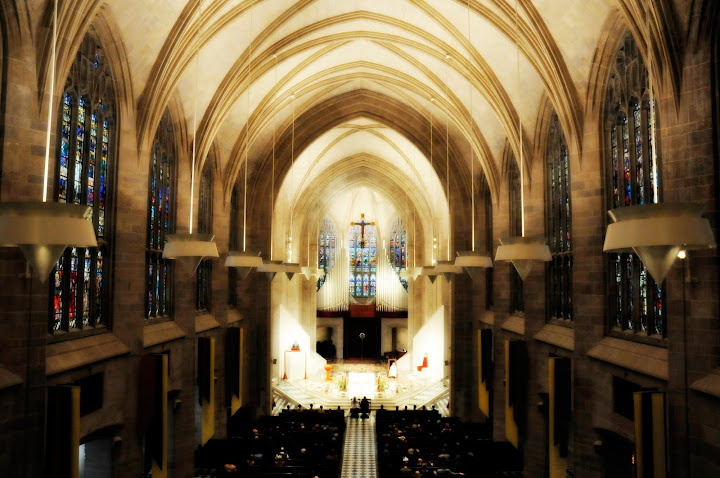
Recently, I bought a tuba and organ piece called Arioso (arr. Baadvik) that I'm not sure if I like yet. Still, I would like to play some combination of brass and organ in the near future. There isn't much in Arkansas in terms of available (and good) organ players. The two I know of are constantly busy. One day it will happen.
Break Forth, O Beauteous Heavenly Light
Subscribe to:
Posts (Atom)

 Posts
Posts

