Showing posts with label art music. Show all posts

29 August 2013

What Does the Future Sound Like?

As I'm getting into teaching more, I've been trying to incorporate technology into my practices. I use speakers, iTunes, video practice aids, Google sharing yada yada... But what about the bigger picture? The further we press on into this lifetime, the more unclear the relationship becomes between music and computer technology.

It started with music recordings, even before iTunes. Buying records. Then tapes, then CDs, all the way to iTunes 99 cent songs. Now most pop artists make their money on tour sales and merchandise than actual albums.

So what about us classical musicians? Most of us have never seen the day when Tubby the Tuba was topping the charts for record sales. Many of us only know what records are because of thrift shops. (Isn't there a song about those?)

Will the momentum of the digital age carry us to a place where it's normal for our performances to sound like this?  Streaming Internet Used to Play a Duet Between Performers

And if so, what kind of help or harm will this do to our fragile state?

The Metropolitan Opera has already ventured into this virtual world by broadcasting live performances at premiere movie theaters across the country. For a fraction of the cost (approximately $20) and all the latest audio advances at your disposal, you can experience world class art almost at the instant it happens. Educational institutions across the nation are now integrating this idea into their music programs. The University of Arkansas does it for every band concert it puts on.

Of course that brings me back to teaching. More and more people, even ones I know, are exploring the idea of providing private lessons via the internet. It started with Youtube and its seemingly endless database of regular people showing and teaching others how to do things such as cook, change oil in a car, tie a bow tie, etc. But now you can learn how to sing, to play guitar. Even still, with faster internet connections, live lessons over Skype and Google Video Chat are becoming common. There are even specialized websites (here too, and article on subject here) dedicated to the study of instruments with professional musicians as internet teachers. Music programs are suffering all over our Nation's school systems. Reasonably, music could be the next technological frontier. It seems extreme but in many states a student can complete high school courses almost entirely online. Of course, there would have to be real people teaching these courses. But what would the cost for that be? Cheaper labor? Higher quality learning? Less effective teaching?

On the one hand, the accessibility of all this is great. As internet connections move toward a ubiquitous reality, those who may not have geographical access to certain educational opportunities can increase their knowledge.

Music should be enjoyed by everyone. I believe that.

But as this digital force becomes more permanent, what is the trade off? Is the reaction an era of music with a distinct sound created by the lack of human connections? Does it feel colder or less connected?Don't get me wrong, talking with my mom over Skype is great since we live thousands of miles apart. But it's not the same as a hug. This concept is likely true when involving music in many of its facets (teaching, learning, performing). Yet brilliant musicians have seemed to achieve an element of humanity and authenticity using the very thing that simultaneously unites and divides us:


This is the Youtube Symphony's Grand Finale performance. It launched a project in which musicians auditioned by submitting videos. They eventually met in Sydney Australia to perform and rehearse together, lead by one of classical musics well-respected conductors, Michael Tilson Thomas (San Fransisco Symphony).

A more extreme example involves a project called Virtual Choir. It is the brainchild of Eric Whitacre (composer). He uses voices from around the world to create a completely original performance experience. Whitacre combines visual technology with masterful sound mixing with his own compositions.

An extremely, crazy, ridiculous example comes from the Coachella Festival in April 2012. Tupac Shakur, one of raps greatest artists, is resurrected. The hologram was made presumably using samples of the rappers voice but it was also programmed to interact with the other (living) rappers on stage for this "live" performance. The figures spent on this haunting project still remain secret but are estimated in the mid six-figure range:


We have to decide. What does the future sound like?

17 June 2013

The Savvy Musician

I feel like I'm about a century behind everyone. But in case you're even more behind the times than I am, check out this website. For any musician with big dreams, Savvy Musician is helpful, encouraging, and forward looking. Thanks to a friend, I've seen the light. I'm into it. Thanks, Kiki.


22 March 2013

Gender Roles in Art Music


I just read an article today that made me want to comment on it. My response to the article is below and so is the link to the article.


http://www.symphonynow.org/2013/03/harpist-in-the-lions-den/


The opportunity for women has definitely increased in the art music community. Unfortunately, I believe these increased opportunities to be lacking still. The first reason I say this is because of the extreme male dominance in "positions of musical power" (e.g. concert masters(mistresses), principal flutists, timpanists, trumpeters etc.).  But this is pretty obvious. Something concerns me more, however.

There seems to be constraint on how a woman can express herself depending on what sort of position she holds. For instance, successful female soloists seem to take on a more sexualized or traditionally feminine image (e.g. Amy Porter, Hilary Hahn). The same goes for high positions in orchestras (who often serve a soloist function) such as concert masters. Famous female conductors, on the other hand, insinuate a more androgynous, and at times traditionally masculine, image or persona.  What is interesting and unfortunate is that these two expressions of feminine energies are virtually mutually exclusive. It is irregular to see a "traditionally feminine" conductor or more masculine concert mistress. Shouldn't be that way.

Males, on the other hand, have been afforded the privilege to express themselves however they want in any art music arena. Whether you talk of the brilliance (and flamboyance) of the late Leonard Bernstein or the stolid demeanor of some principal male woodwind players, the fact remains that there has always been freedom in all art music arenas for a man to express himself in anyway he felt. It would be great if women openly had this freedom too.

09 February 2013

Anna Moffo, Kanye West, and Me

So, I've got a recital coming up. And I'm guessing of the 5 people that read my blog, none of you are even close enough to get here. In preparing for my recital however, I've become more and more obsessed with vocal music. One of the pieces I'm performing is from Rachmaninoff's 34th opus, entitled Vocalise No. 14. It's a tirelessly performed piece but for me, it's a first. It's gorgeous in every way. A great recording of the late and great Anna Moffo is posted below. She glides with such ease that it's almost unbelievable.

I thought it would be great to do some other "well-known" music on my recital this time around. It starts with Kanye and ends with West; I'm putting my money where my mouth is.

I'll have a sneak peak recording from rehearsal on my website next week.

01 February 2013

Free Music

Many know of IMSLP, a virtual library that both supplies free music (music in public domain) and music for sale that you can download. What I didn't know about, was Partifi.


On my upcoming recital I'm playing Vocalise No. 14, op. 34 by Rachmaninoff (overdone sure, but I love it). I looked for it on IMSLP and found the score easily. But with Partifi, I was able to create a piano part and tuba part for free and in PDF format. You can do this with music you have purchased yourself or using the IMSLP database. It's great. Use it. Love it. Play it.


http://www.partifi.org/

13 January 2013

Stories in Music

I've always been a terrible storyteller. I couldn't tell a believable lie if my life depended on it. And I can only captivate an audience if I'm in the middle of humiliating myself. There is something about keeping details and sequences in my head that eludes my presentation. I suppose it has made me honest by default and a pretty strange person to have a conversation with.

In spite of my poor storytelling skills, I almost solely depend on original narratives when performing music. It is a healthy distraction from the neurotic preoccupations that I sometimes fall into. For instance, a long period of rest can be time to listen and understand how to fit into the soundscape around you. For me, I figure out 1,000 ways to piff my starting pitch or count the rests with an astounding inaccuracy. The story keeps me mentally engaged. It's the old "Song and Wind" philosophy. Hear the sound, direct the wind, let you body do what it needs to produce. Sounds like magic and nonsense. And though Arnold Jacobs was indeed magical, he was a genius. There is nothing nonsensical about his pedagogy. It works.

What I find interesting about stories in music is how it works with what we now define as "absolute music." The phrase itself has changed meanings dramatically over time. Today it's thought of most commonly as musical "purists," in the sense that music truly speaks for itself. It is a concept that I neither agree with nor understand. I think it is humanly impossible to hear music or perform it without an allusion, reminder, or out right symbolism attached to something extramusical. Therefore, I think musical purity is malarkey. People have told stories forever. From cavemen to Renaissance poets to country artists. It's apart of our nature.

So, the point?

I think a story is integral to sustaining the art music scene. Sure Power Points and videos did not exist during most of the classical greats' time. But as I've said before in a previous entry, I believe that art music needs to meet people where they are. Again, I don't advocate the abandonment of traditional performance. But if art music is virtually suffering for lack of public interest, then by God CREATE SOME! People like to see things. A simple image shown for every movement of a symphony, a silent short film for a tone poem. Case and point: a lot of John Cage's music sounds ridiculous by itself. And not in a good way. But when paired with his partner's choreography (Merce Cunningham), it makes a lot of sense. Unfortunately what I am suggesting is extreme, despite the fact that art has always been on the edge of cultural normalcy. But something more "realistic" that could be attractive to intimidated people is comprehensive program notes.


I hate nothing more than going to a concert and starting to read what I think will be information about the music I hear. Instead, I mostly get a detailed pedigree of the composer (don't care), how long the piece took to compose (don't care), info about the composer's family (don't care). And if I don't care about this stuff, what are the chances that someone who is already questioning the experience cares?


I know some conducting professors who think the idea of a "listening map" style program note is a silly thing to produce for a concert. I am of the mind, however, that if people in need of a listening map constitute your patronage, then give it to them. At the very least, give them a choice at the concert; two styles of concert programs. There needs to be incentive to come back again, an assurance that someone is looking out for the layperson. The layperson used to be the one at the concert. Now the layperson watches reality television and on demand movies. While all of it isn't "high brow," it's entertaining. The intimidation factor is removed by the comfort of knowing what to expect on some level.  Art music settings on the other hand are 100% mystery to laypeople which is equivalent to 100% terrifying. Who wants to subject themselves to that kind of feeling, especially when no one is around to help a person out of it?


05 January 2013

Reinventing Hip Hop

James "Dilla" Yancey, was a hip-hop genius. While he has passed on, his music continues to inspire people all over the country, Miguel Atwood-Ferguson included.

Miguel is brilliant in his own right. I love his orchestral settings of J. Dilla's music, his raw passion, and his intellect. The guy is really in love with music and good at spreading that love. People should know who both of these guys are. Below is an example of their musical paths crossing. I would love if I could be apart of something like this.


01 January 2013

Pop Culture and Why I Like It Lately

Lately, I've been more and more interested in pop culture, which is weird because I'm a bit of an old soul when it comes to how I view things. But on second thought it's not weird because pop culture has been gradually moving backwards in time. I don't know which came first, but it's happening in mainstream fashion too. I'm saying all this to say, I LOVE IT.

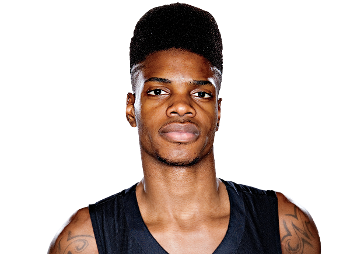
Take this guy for example:


Nerlens Noelle. He was born in 1994. In 1994, I was 5 years old and I was sporting this exact same haircut, the high-top fade. It wasn't as high and I didn't have tattoos. But the idea was there. When I look at this, I get nostalgic. I don't know if nostalgia is the case for the popularity of this kind of stuff but I wouldn't be surprised. I mean, things are totally upside down in our country. Perhaps the past is a comforting thing to think about and be reminded of. Nerlens isn't the only one nodding to fads that were popular decades ago. Rhianna's last SNL performance was a blast from the past. So is Kesha's latest video for her single Die Young. And sorry University of Arkansas girls, the leggings, side pony tails, and oversized shirts you took from your dads' closets were around long before your parents even thought of having you.

None of this is really my main point. What I've enjoyed most about pop culture's obsession with resurrecting the past is the change of music sounds and practices. Pop artists from about the mid 70s on to today have been decidedly futuristic, pushing the limits of synthesizers, sound engineering, and live performance production. The last 10 years have been shifting back to something my "old soul" really values.

Music.

I think the technological advances for the sake of music hat have been made over the decades are great. But the robotic precision and auto tuning of popular artists supposedly "expressing themselves" left a lot to be desired for me. Today, the fallibility and rawness of human nature is coming back to music. Adele is a wonderful example of this. Her music is beautiful but simplistic. It allows your ears to hone in on the words and appreciate the emotions in her voice. Who cares that it isn't immaculately tuned from beginning to end. I don't. It sounds good. It sounds real. I feel connected.

Another aspect of reviving the past that I love is the sound that is infiltrating popular music. Beyonce's most recent album, 4, is overflowing with aesthetics of Prince, Whitney Houston, and old R&B girl groups. The music on the album reaches beyond simple influence and has turned into a full on reincarnation. Party is one of her more successful singles from the album and it sounds like something right off of an SWV album. And if you've seen the video, it looks like it was filmed about 20 years ago.  It's incredible. What I like most about the song is that the music backs up Beyonce's voice much in the way that Adele's music backs up hers. The beat does not constitute the most important part of the song. The singer does.

On Beyonce's single Schoolin Life,  you can hear the rhythm, guitar, and keyboard of Prince and vocals that sound like it was written for Whitney Houston herself. While I wasn't really around when either of these people were at their heights, the music takes me back to the sounds that my mom enjoyed while riding with her in the car. It sounds good. I feel connected.

One of the last things I really enjoy about this music trend is the instruments. More and more artists are utilizing the talents of real musicians. Less famous, more independent artists have done this for years. But it's been a while for pop artists to have bands with live brass or orchestras with live strings. Beyonce comes to mind because of her all female band Suga Mamas. But rappers are on this wagon. Kanye did a performance with ballerinas and orchestra about a year ago on SNL of his song Runaway. I think highly visible people like this are putting instrumentalists back on the map. They are making it possible for the revival of second line style brass bands to be successful. Opening up the door for kids to ask what that cool thing the dude is blowing on behind Jay Z. It makes kids demand that they be just like the genius sax player (Clarence Clemons) in Lady Gaga's song. Pop music is reaching to the past to transform itself.

Meanwhile, us "art musicians" are starving for work and playing for quarter full concert houses.

Pop artists are opening doors for art music, the music I love, to become relevant again. This is why I really love pop culture today. It is a sort of connecting vehicle between the present and past. It gives a reason for young folks like myself and those even younger to talk about things that would have otherwise been boring, out of date, and uncool. Face it, art music is the ultimate resurrection act. 200 year old music played for audiences who can remember FDR's Fireside Chats.

One of my strongest beliefs in education is meeting students where they are. If we "high art" musicians don't meet potential audiences  where they are, we won't be dying anymore. We'll be dead. No more morbid resurrections. Just gone.

I think people might like what we do musically a lot more if we showed an interest in what they do musically. It doesn't mean that we play "pop classical" music on every concert we program. But it might mean that we perform something with more contemporary influences and sounds, which doesn't mean a-tonal, tone row inspired crap (not that it's all crap). Rather, commission composers that are writing in traditional forms but use hip hop sonorities. Try programmatic music that sounds more like being on a mission in Call of Duty than it does the city sounds of Chicago. Meet the people where they are.

The Detroit Symphony Orchestra has done recent work with some famous DJs, video game music, and Kid Rock. And while they are not the prime financial planning example, they appear to be an orchestra for the people. After all, what is music without an audience?

Is our music so great and our egos so mammoth that we will resign to kill ourselves slowly rather than"taint" our empty sanctuaries sounding of Bach, Hindemith, and John Cage?